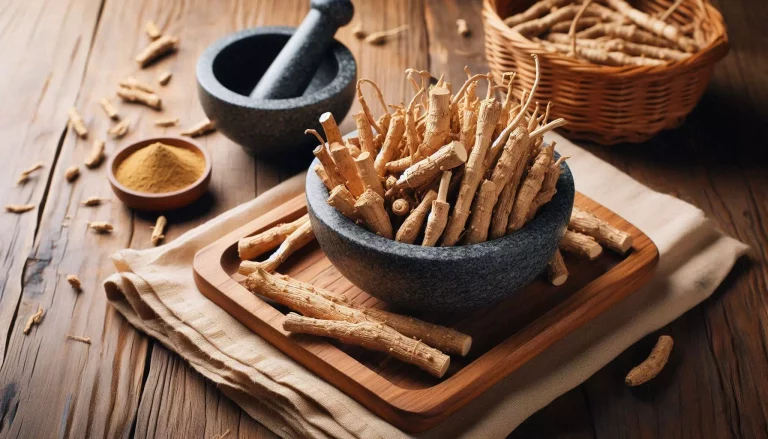
Moringa is sold two ways: the leaf, dried and powdered, and the seed, milled. Same tree, same price at Alchemiss — R380 a bottle — and not interchangeable. This guide sets out what each part actually contains, who each one suits, and the safety questions that come up most: chemotherapy, cancer treatment, other medication and pregnancy.
The short answer
The leaf is food. The seed is closer to a tonic. If you want calcium, iron, vitamin A and fibre in something you take every day without thinking about it, the leaf is your bottle. If you want the concentrated part of the plant — protein, oil and moringa’s own sulphur compounds — that is the seed.
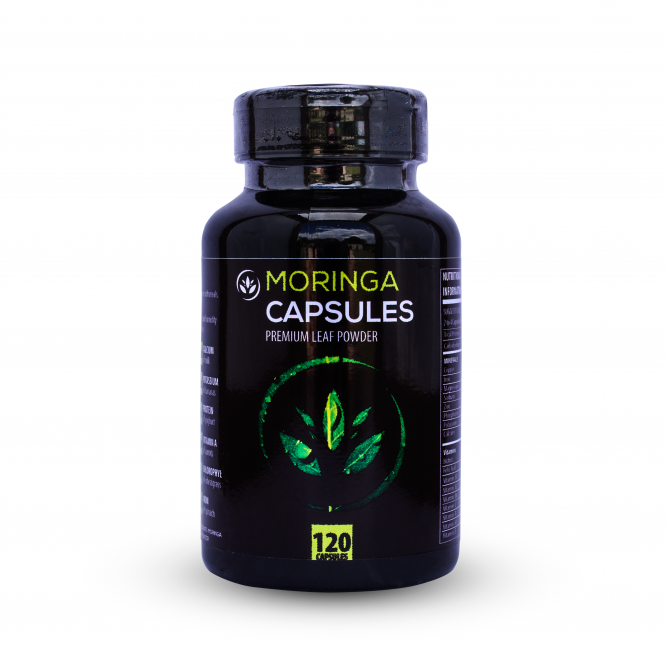
What each part actually contains
These are published figures for the dry powder, per 100 g. A capsule holds a fraction of that, so think supplement, not portion.
| Per 100 g of dry powder | Moringa seed | Moringa leaf |
|---|---|---|
| Protein | 33–38% | 19–27% |
| Fat / oil | 31–45% (oleic acid 70–80% of the oil) | about 5% |
| Fibre | 5–16% | 8–19% |
| Glucosinolates | 8–10%, richest source of MIC-1 (moringin) | present, not concentrated |
| Calcium | lower | 2 000–2 500 mg |
| Iron | lower | 25–30 mg |
| Potassium | lower | 1 300–1 500 mg |
| Beta-carotene (vitamin A) | lower | 15–20 mg |
| What it is closest to | a tonic | a vegetable |
What that means in practice
- Leaf is where the minerals are: dried leaf powder is roughly ten times the calcium of fresh leaves and far higher in iron, potassium and beta-carotene. Drying concentrates what was already there.
- Seed is where the protein, the oil and the isothiocyanates are. It carries 8–10% glucosinolates, which the plant’s own enzyme turns into isothiocyanates when the seed is crushed — and it is the part where MIC-1, also called moringin, is most concentrated.
- Fibre is higher in the leaf, which is good for most people and uncomfortable for some.
Which one suits you
Choose the leaf if…
- You want one daily green capsule and are not chasing a specific compound.
- You eat little red meat or little dairy and want plant iron and calcium in the routine.
- You want more fibre.
- You want the cheapest month: 120 capsules is four months at one a day.
Choose the seed if…
- You want the isothiocyanates, the protein and the oil rather than a broad multivitamin.
- You eat low-carb and want the fat — 70–80% of the seed oil is oleic acid, the same fat as olive oil.
- Fibre-heavy greens sit badly in your gut; the seed has less fibre than the leaf.
- You would rather take a capsule than spoon leaf powder into food.
Moringa and cancer treatment: the honest answer
This is the question we get most, and it deserves a straight reply rather than a sales line.
Moringa is not a cancer treatment. There are no human trials of moringa alongside chemotherapy, and nothing here should be read as a reason to delay, reduce or stop treatment.
Memorial Sloan Kettering, which maintains one of the most thorough herb databases in the world, advises that people in active cancer treatment should not take herbal supplements unless their oncology team prescribes or approves them — and that supplements be stopped about seven days before chemotherapy, radiotherapy or surgery.
- Why the caution: in laboratory work moringa inhibits CYP3A4, a liver enzyme that processes many drugs, including some chemotherapy agents. That is a mechanism rather than a proven interaction in people, but it is exactly the mechanism by which a supplement can quietly change how a treatment works.
- What to do: take the bottle to your oncologist or oncology pharmacist and ask about your regimen by name. That is a five-minute conversation with a real answer.
- If your team approves moringa, the leaf is the gentler, more food-like option: it is the part eaten as a vegetable, it has the longer safety record, and it is lower in the concentrated isothiocyanates. The seed is the stronger of the two and the one to be more careful with.
- Where moringa can genuinely help during treatment is nutrition — protein, iron and plant nutrients for someone whose appetite has gone. That belongs in the conversation with your team, not in a decision made from a product page.
- Never stop treatment for a supplement. Not moringa, not anything.
Moringa alongside other medication
Moringa leaf and seed are foods with a long history of use and are generally well tolerated. A capsule is stronger than the handful of leaves you would cook with, so tell your doctor or pharmacist what you are taking, especially if any of these apply:
- Diabetes medication. Moringa has shown blood-sugar-lowering activity in studies. On insulin, a sulfonylurea (glibenclamide, gliclazide) or metformin, test more often for the first fortnight — combined use can push glucose lower than expected.
- Sitagliptin and similar. In an animal study, chronic moringa use reduced sitagliptin’s effect. Not proven in people, but worth mentioning if that is your medication.
- Blood-pressure medication. Moringa can lower blood pressure; stacked with tablets, watch for dizziness on standing.
- Warfarin and other anticoagulants. Green leaf powder carries vitamin K, which works against warfarin. Tell your anticoagulation clinic, and keep the daily amount steady rather than varying it.
- Anything processed by CYP3A4. See the cancer section above — the same enzyme handles many common drugs. Mention the supplement; do not assume it is inert.
- Surgery or a procedure. Stop about a week beforehand.
- Thyroid medication, HIV treatment, transplant drugs. No specific moringa interaction has been established, but these have narrow margins and a pharmacist should check before you add anything.
Who should not take it
- Pregnancy and breastfeeding. Avoid. Moringa is not considered safe in pregnancy. The toxic parts of the plant are the root and bark, which contain spirochin — not what goes into these capsules — but the caution holds.
- Children. No established dose. Ask a practitioner.
- Anyone who reacts. Rare reactions have been reported: rash, swelling, breathing trouble. Stop and get medical help.
How much to take
- Seed capsules: one a day with food and water; 90 capsules is three months at one a day, six weeks at two. The phytates in seed bind minerals, so take it a few hours away from iron or calcium tablets.
- Leaf capsules: one a day with food and water; 120 capsules is four months at one a day. Plant iron absorbs better with vitamin C — take it with fruit or juice rather than tea or coffee.
- More is not better. These are foods in concentrated form, not a dose to escalate.
Which one to buy
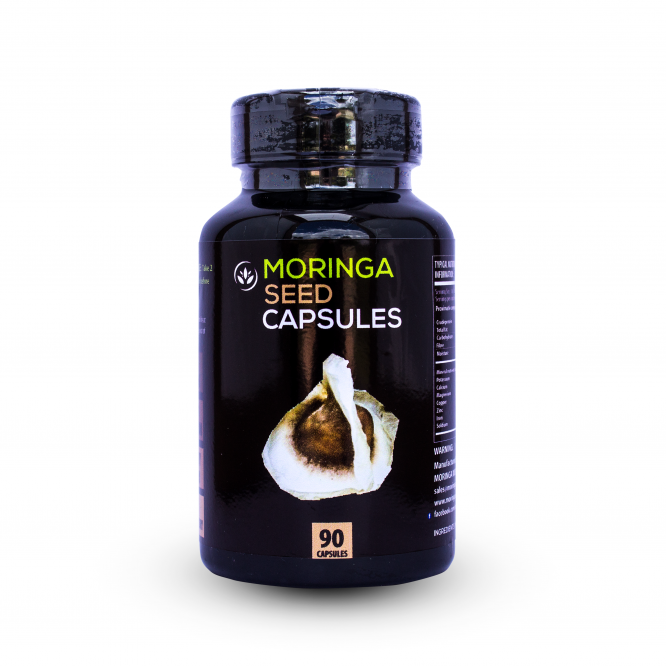
- Moringa Leaf Capsules — 120 capsules, R380. Calcium, iron, beta-carotene and fibre.
- Moringa Seed Capsules — 90 capsules, R380. Protein, oil and MIC-1.
Both are halal gelatin capsules, delivered nationwide, with free shipping over R1000.
The honest summary
- The leaf is the everyday green; the seed is the concentrated tonic.
- Neither is a cancer treatment, and during chemotherapy the only safe sequence is: ask your oncology team first.
- If you take medication for diabetes, blood pressure or clotting, mention moringa before you start — not after.
This article is general information, not medical advice. It does not replace a conversation with your doctor or pharmacist.